



Table of Contents
Maheshwar Sutra: The Foundation of Sanskrit Grammar: An Introduction

The Maheshwar Sutra (माहेश्वर सूत्राणि) are a set of 14 phonetic aphorisms (sutras) that form the structural foundation of Sanskrit grammar, especially as formulated by the legendary grammarian Panini in his masterpiece, the Ashtadhyayi. These sutras are not just phonetic groupings; they are a sophisticated linguistic framework designed to organize Sanskrit sounds systematically and logically.
According to tradition, these sutras originated from the sound of Lord Shiva’s damaru (small drum), hence the name Maheshwara (another name for Shiva).
What are the Maheshwar Sutra?
The Maheshwar Sutra are a sequence of Sanskrit phonemes arranged by Panini in a specific and meaningful order to help define sound-based grammatical rules concisely. There are 14 Maheshwara Sutras, each ending with a marker consonant called it (इत्), which is not part of the actual sound group but indicates the end of a phoneme sequence.

The List of Maheshwar Sutra
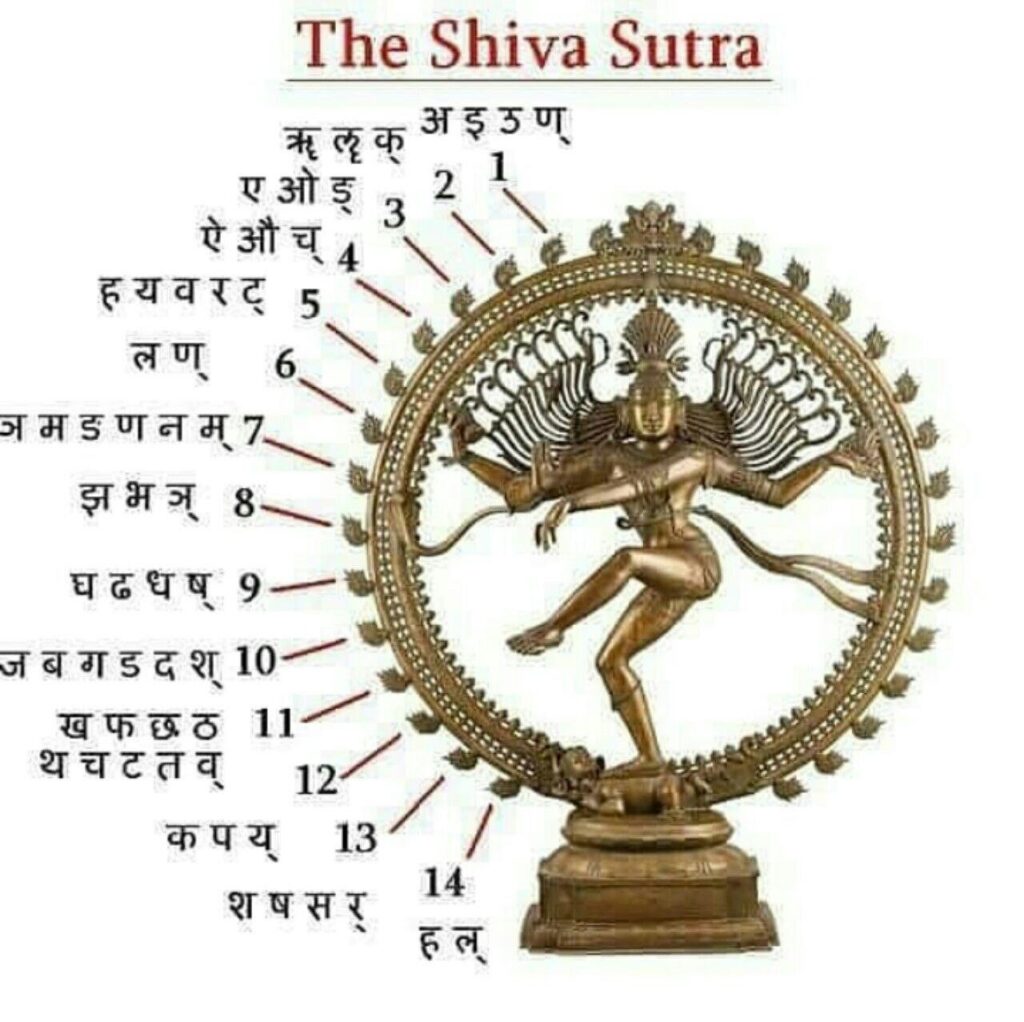
Here are the 14 Maheshwara Sutras:
अइउण्
ऋऌक्
एओङ्
ऐऔच्
हयवरट्
लण्
ञमङणनम्
झभञ्
घढधष्
जबगडदश्
खफछठथचटतव्
कपय्
शषसर्
हल्
a i u ṇ
ṛ ḷ k
e o ṅ
ai au c
ha ya va ra ṭ
la ṇ
ña ma ṅa ṇa na m
jha bha ñ
gha ḍha dha ṣ
ja ba ga ḍa da ś
kha pha cha ṭha tha ca ṭa ta va
ka pa y
śa ṣa sa r
ha l
Note: The final consonant in each sutra (such as ṇ, k, ṅ, c, etc.) is the it marker—it is not counted among the usable phonemes but indicates the end of the group.
Purpose and Use
The primary function of the Maheshwar Sutra is to serve as a basis for creating pratyahara—a shorthand system that allows Panini to refer to groups of sounds efficiently in his grammatical rules.
What is a Pratyahara?
A pratyahara is a compact representation of a group of sounds. It is formed by combining the starting phoneme of a sequence with the it marker of the ending sutra.
For example:
aC = a (from 1st sutra) + C (from 4th sutra → ai au c)
→ includes all vowels: a, i, u, ṛ, ḷ, e, o, ai, au
haL = h (from 5th sutra) + L (from 14th sutra → ha l)
→ includes all consonants
This system allows Panini to compress complex phonetic rules into short, elegant formulas.
Importance of Maheshwar Sutra
Conciseness in Grammar:
Panini’s Ashtadhyayi is famous for its brevity. The Maheshwara Sutras provide the necessary shorthand to keep the grammar concise and powerful.
Scientific Arrangement of Sounds:
The phonemes are organized based on articulatory features—how and where in the vocal tract the sound is produced. This reflects an advanced understanding of phonetics.
Linguistic Innovation:
It is perhaps the earliest and most refined use of a meta-language in human history, showing how rules can be codified with remarkable precision.
Spiritual and Cultural Significance:
Traditionally, the sutras are believed to have divine origin—emanating from Lord Shiva himself. This adds a spiritual dimension to their linguistic significance.
Philosophical and Traditional Significance
According to ancient belief, after witnessing the destruction of Tripura (Tripurasura), Lord Shiva played his damaru 14 times. From these divine beats, the 14 Maheshwar Sutra emerged. Panini, being a great sage and scholar, “heard” these divine sounds and systematized them for grammatical use.
This tradition symbolizes the intimate connection between language, sound, and the divine in Indian philosophy.
Conclusion
The Maheshwar Sutra are not just linguistic tools; they are a brilliant synthesis of language, logic, and spirituality. Panini’s use of these sutras to structure the Ashtadhyayi demonstrates a mastery of linguistic economy and clarity rarely matched in any tradition. For students, scholars, and seekers of Sanskrit, understanding the Maheshwar Sutra is essential—it opens the door to the deep and dynamic world of classical Indian linguistics.


