

Table of Contents
Aatreya Ayurveda Lifestyle: An Introduction

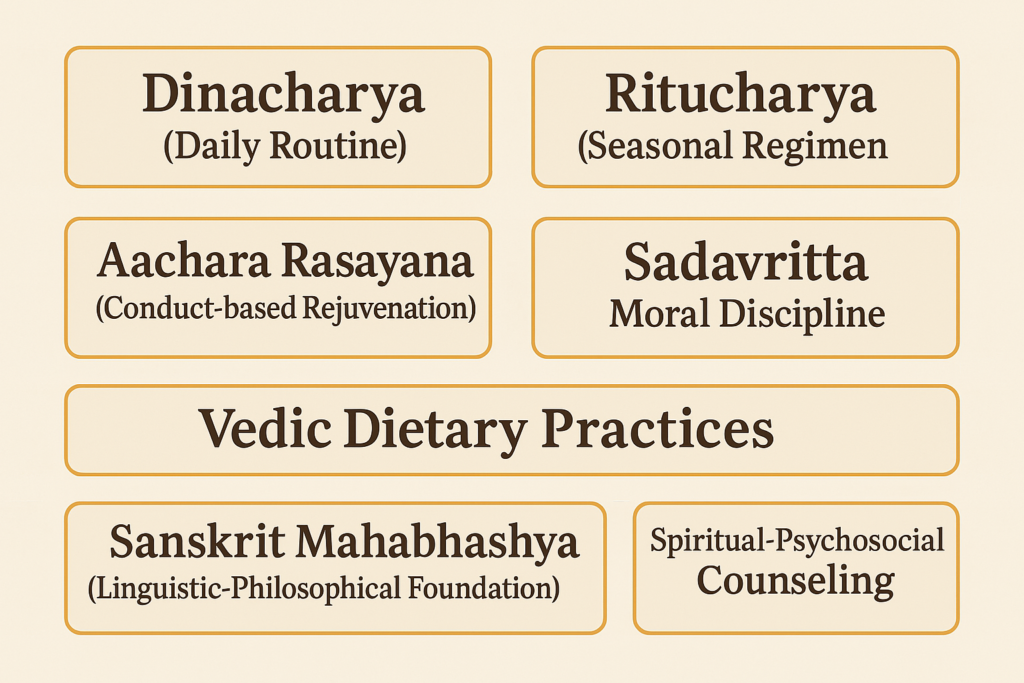
Ayurveda is not merely a system of medicine-it is a science of life. It teaches us how to live in harmony with nature and our inner self. The lifestyle model developed and promoted by Aatreya Aarogya Mandir, Budhanilkantha-12, Kathmandu, incorporates seven key pillars that together form a comprehensive and holistic Ayurveda lifestyle. These are:
Dinacharya (Daily Routine), Ritucharya (Seasonal Regimen), Aachara Rasayana (Conduct-based Rejuvenation), Sadavritta (Moral Discipline), Vedic Dietary Practices, Sanskrit Mahabhashya (Linguistic-Philosophical Foundation), and Spiritual-Psychosocial Counseling.
Let us explore each in detail:
Dinacharya (Daily Routine)
Dinacharya is the practice of following a structured and nature-aligned daily schedule. It involves rising before sunrise, evacuating the bowels, oral hygiene, bathing, practicing yoga and pranayama, meditation, consuming balanced meals, and going to bed early.
Benefits:
Aligns the body with the natural circadian rhythm
Strengthens digestive fire (Agni)
Enhances immunity and mental clarity
Dinacharya in Brihatttayee
Ritucharya (Seasonal Regimen)
Ritucharya refers to adjusting one’s diet, activities, and lifestyle in accordance with the seasonal changes. Ayurveda divides the year into six seasons, each requiring different dietary patterns, exercise routines, clothing, and therapeutic interventions.
For example:
Summer: Light, cooling foods and avoiding direct sun
Winter: Nourishing, warm, oily foods with physical activity
This approach strengthens the body’s adaptability and prevents seasonal illnesses.
Aachara Rasayana (Behavioral Rejuvenation)
‘Rasayana’ means rejuvenation, and ‘Achara Rasayana’ focuses on rejuvenating the body and mind through ethical and disciplined behavior. This includes virtues such as truthfulness, compassion, non-violence, forgiveness, self-control, patience, and a spirit of service.
Practicing Achara Rasayana enhances:
Mental peace
Emotional stability
Harmonious social relationships
Inner vitality
Sadvritta (Moral Discipline and Social Ethics)
Sadvritta deals with personal ethics and social conduct. It encourages individuals to live with honesty, integrity, cleanliness, humility, and responsibility toward society and nature.
Examples include:
Avoiding theft, violence, or addiction
Speaking truthfully and respectfully
Maintaining cleanliness of body and mind
Sadvritta creates a foundation for a just, healthy, and peaceful society.
Vedic Dietary Habits
Ayurveda emphasizes that food is not just fuel—it is the foundation of consciousness. The Vedic approach to food includes:
Eating fresh, seasonal, and sattvic (pure) meals
Eating mindfully, in a peaceful environment
Avoiding overeating or under-eating
Cleansing rituals before meals
Proper sequencing of foods
This style of eating sustains digestive power, prevents toxin accumulation, and nurtures mental and spiritual well-being.
Sanskrit Mahabhashya (Philosophical and Linguistic Framework)
The Mahabhashya of Panini, especially as interpreted by Patanjali, is more than a treatise on grammar—it is a profound exploration of logic, consciousness, and reality. Understanding Sanskrit and its grammatical depth enhances:
Philosophical clarity
Precision in Ayurvedic terminology
Access to ancient texts and deeper meanings
Development of refined intellect and analytical ability
For Ayurveda practitioners and seekers of truth, this becomes a vital intellectual and spiritual tool.
Spiritual-Psychosocial Counseling
This dimension integrates ancient wisdom with modern counseling principles. It includes:
Meditation and mindfulness practices
Recitation of mantras and spiritual texts
Group satsang (spiritual gatherings)
Personal introspection and counseling
The goal is to help individuals manage stress, build emotional resilience, cultivate spiritual awareness, and heal at the deepest psychological level.
Conclusion
These seven interconnected pillars of Ayurveda Lifestyle offer a profound blueprint for preventive and promotive health. By embracing Dinacharya, Ritucharya, Achara Rasayana, Sadvritta, Vedic Food Principles, Sanskritic Insight, and Spiritual Counseling, we can lead lives that are not only disease-free but also enlightened, harmonious, and fulfilling.
This model is particularly effective in preventing non-communicable diseases (NCDs) and addressing the root causes of modern lifestyle disorders. Ayurveda lifestyle is not an alternative—it is a universal, timeless, and transformative approach to holistic health and well-being.
Aatreya Ayurveda lifestyle Aatreya Ayurveda lifestyle Aatreya Ayurveda lifestyle Aatreya Ayurveda lifestyle Aatreya Ayurveda lifestyle Aatreya Ayurveda lifestyle Aatreya Ayurveda lifestyle Aatreya Ayurveda lifestyle Aatreya Ayurveda lifestyle Aatreya Ayurveda lifestyle Aatreya Ayurveda lifestyle Aatreya Ayurveda lifestyle Aatreya Ayurveda lifestyle Aatreya Ayurveda lifestyle


