

Table of Contents
Ayurveda: The Science of Life

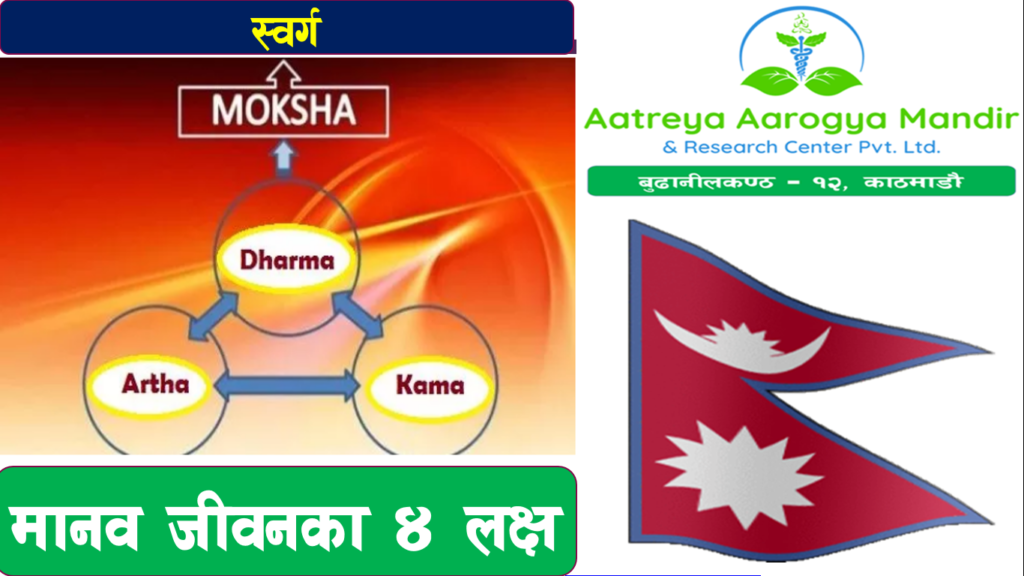
Ayurveda is the oldest Medical System in the World. We should live life with high respect for and adherence to the teachings of Ayurveda in order to remain healthy, live long, and attain the four Purusharthas—Dharma (righteousness), Artha (wealth), Kama (desires), and Moksha (liberation).
आयुः कामयमानेन धर्मार्थसुखसाधनम् । आयुर्वेदोपदेशेषु विधेयः परमादरः ।।
“Āyuḥ kāmayamānena dharmārthasukhasādhanam। Āyurvedopadeśeṣu vidheyaḥ paramādharaḥ॥”
Ayurveda is the oldest medical system in the world that uses diet, herbs and other practices to restore balance to the body mind and spirit. The word Ayurveda comes from the Sanskrit word Ayur (life) & Veda(Science or Knowledge).
The Nepali National Medical System is a holistic science designed to ensure a long, healthy, happy, and prosperous life. The verse “Āyuḥ kāmayamānena dharmārthasukhasādhanam।” signifies that anyone desiring a long life must pursue Dharma (righteousness), Artha (wealth), Kāma (desires), and Moksha (liberation). To achieve this, one must show the highest reverence towards the teachings of Ayurveda, as emphasized in “Āyurvedopadeśeṣu vidheyaḥ paramādharaḥ।”
The verse is divided into two parts for better understanding:
(A) आयुः कामयमानेन धर्मार्थसुखसाधनम् ।
Āyuḥ kāmayamānena dharmārthasukhasādhanam।
This part highlights the importance of longevity in achieving the four primary goals of human life:
Dharma (Righteousness): Leading a moral and ethical life.
Artha (Wealth): Attaining financial stability and prosperity.
Kāma (Desires): Fulfilling rightful desires and enjoying a balanced life.
Moksha (Liberation): Achieving spiritual enlightenment and freedom.
Without good health and a long life, the pursuit of these goals becomes difficult, making Ayurveda essential.
(B) आयुर्वेदोपदेशेषु विधेयः परमादरः ।।
Āyurvedopadeśeṣu vidheyaḥ paramādharaḥ।
This part stresses the importance of respecting and following the teachings of gift of sages, as it provides:
A holistic approach to life, not just a system of medicine.
Guidelines on diet, daily routine, seasonal regimen, ethical conduct, and mental well-being.
A preventive and promotive health approach leading to long life and well-being.
Ayurveda Lifestyle
Ayurveda prescribes a structured approach to healthy living, which can be categorized into five fundamental aspects:
Dinacharya (Daily Routine)
Following a disciplined daily schedule is key to good health, including:
Waking up at Brahma Muhurta (pre-dawn hours)
Drinking warm water to cleanse toxins
Oral hygiene (cleaning the tongue, teeth, and gums)
Abhyanga (oil massage) for strength and vitality
Yoga and meditation for mental balance
Consuming a nutritious and balanced diet
Exercise for physical fitness
Ensuring proper sleep at the right time
Ritucharya (Seasonal Regimen)
To maintain harmony with nature, our national medical system prescribes seasonal lifestyle adaptations:
In summer: Cooling foods, fruits, and hydration are essential.
In winter: Warm, nourishing, and oily foods are recommended.
During monsoon: Light, easily digestible food is advised to maintain digestion.
Sadvritta (Moral and Ethical Code)
Ayurveda emphasizes social and moral conduct for overall well-being:
Speaking truthfully and kindly
Practicing non-violence (Ahimsa)
Developing patience and self-restraint
Fostering kindness and compassion
Maintaining positive social interactions
Achara Rasayana (Positive Conduct for Mental Health)
Cultivating positive thoughts and mindfulness
Engaging in self-discipline and spiritual practices
Avoiding negative emotions like anger, jealousy, and stress
Developing mental clarity and emotional stability
Ayurveda Dietary Practices
Consuming fresh, seasonal, and easily digestible food
Following proper eating habits (right quantity, time, and food combinations)
Enhancing digestive fire (Agni) through appropriate diet and lifestyle choices
Avoiding junk food and processed items
Sadvritta
Do’s and Don’ts for healthy living.
Spiritual Psychosocial Counselling
To know oneself, to establish harmony with life and the universe, to attain peace, to foster harmony, brotherhood, and cooperation within the family, society, workplace, and globally, and to cultivate gentle human emotions.
Relevance of Ayurveda in Modern Life
Today, unhealthy lifestyles, stress, poor dietary habits, lack of sleep, and minimal physical activity have led to a rise in non-communicable diseases (NCDs) such as hypertension, diabetes, obesity, mental health disorders, and cancer.
By adopting Ayurvedic lifestyle principles, these diseases can not only be managed but also prevented.
Why Should One Follow an Ayurvedic Lifestyle?
 Prevention-oriented approach rather than just treatment
Natural, holistic, and free from side effects
Ensures balance between physical, mental, and spiritual health
Maintains equilibrium of Doshas, Dhatus, Malas, and Agni
Compatible with modern medicine and integrative healthcare
Conclusion
The verse “Āyuḥ kāmayamānena dharmārthasukhasādhanam।” highlights that longevity is not just about living longer but about achieving Dharma, Artha, Kāma, and Moksha. To achieve this, one must adopt Ayurveda as a way of life and show paramādharaḥ (utmost respect) to its teachings.
In the modern era, Ayurveda lifestyle principles are the key to disease prevention, health promotion, and overall well-being. Therefore, every individual should embrace Ayurveda for a healthier, happier, and more fulfilling life.

