


Table of Contents
Stress Hormones & Their Effects on Our Body: An Introduction

Stress is a natural response of the body to perceived threats or challenges. When we face physical, emotional, or mental pressure, our body activates a complex system of hormonal responses to help us cope. These hormones, commonly known as stress hormones, prepare the body for a “fight or flight” response. While this is essential for survival in acute situations, chronic stress and prolonged elevation of stress hormones can have harmful effects on the body.
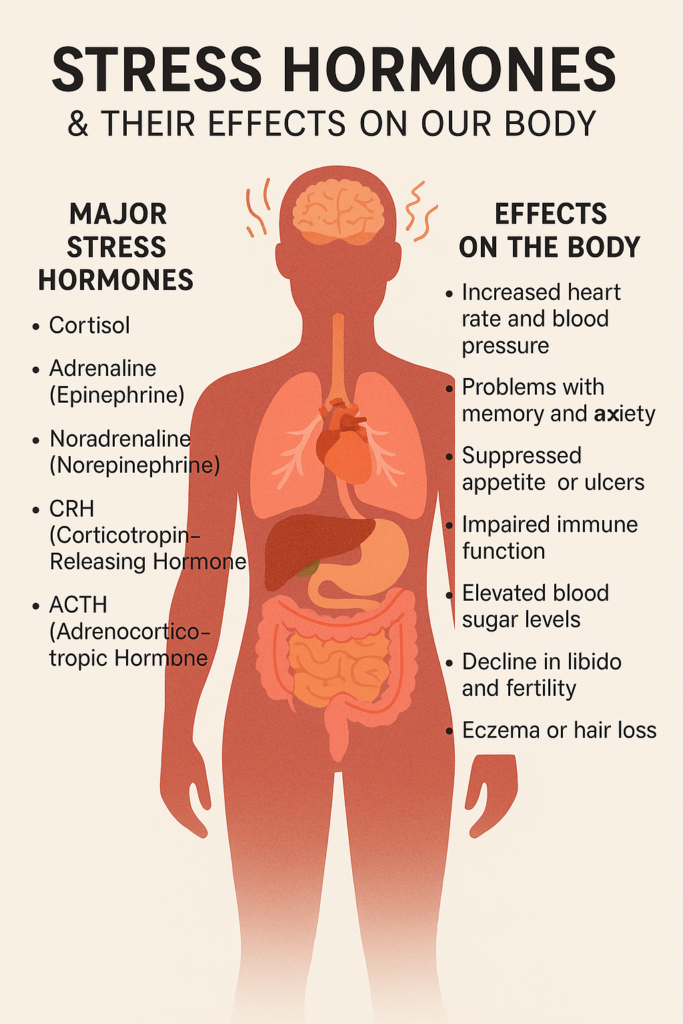
Major Stress Hormones
Cortisol
Known as the primary stress hormone.
Released by the adrenal glands.
Helps regulate metabolism, blood sugar, and inflammation.
Increases in chronic stress situations.
Adrenaline (Epinephrine)
Responsible for immediate stress response.
Increases heart rate, dilates airways, and boosts energy.
Also released by adrenal glands.
Noradrenaline (Norepinephrine)
Similar to adrenaline.
Increases alertness and blood pressure.
Enhances focus during acute stress.
CRH (Corticotropin-Releasing Hormone)
Secreted by the hypothalamus.
Triggers the release of ACTH.
ACTH (Adrenocorticotropic Hormone)
Produced by the pituitary gland.
Stimulates adrenal glands to release cortisol.
Effects of Stress Hormones on the Body
Cardiovascular System
Increased heart rate and elevated blood pressure.
Chronic stress increases the risk of hypertension, heart attacks, and strokes.
Brain and Mental Health
Temporary increase in alertness and focus.
Prolonged exposure leads to memory issues, anxiety, depression, and brain cell damage, especially in the hippocampus.
Digestive System
Acute stress suppresses appetite, but chronic stress may cause bloating, ulcers, acid reflux, and irritable bowel syndrome (IBS).
Immune System
Short-term stress may boost immunity.
Chronic stress weakens immune defenses, leading to frequent infections, slow wound healing, and inflammation.
Blood Sugar and Metabolism
Cortisol increases blood sugar levels for energy.
Long-term elevation may contribute to insulin resistance and type 2 diabetes.
Reproductive System
Decreases testosterone in men and disrupts ovulation and menstruation in women.
May lead to reduced libido and fertility problems.
Skin and Hair
Can cause or worsen eczema, acne, psoriasis, and hair loss.
Ayurveda Perspective on Stress
From the Ayurveda standpoint, stress is a Manasika (mental) disorder, primarily involving Rajas and Tamas Guna (qualities of the mind). It often aggravates the Vata Dosha, which governs the nervous system.
Key Concepts in Ayurveda Stress Management:
Brahmamuhurta Sadhana (Morning Rituals)
Meditation, yoga, pranayama, chanting, and mindful movements help stabilize mind and hormones.
Diet (Ahara)
Favor Sattvik (pure and nourishing) foods – milk, ghee, fruits, whole grains, and greens.
Avoid stale, spicy, heavy, fried, or processed foods.
Ayurveda Herbs & Remedies
Ashwagandha (Withania somnifera): Reduces cortisol and boosts resilience.
Brahmi (Bacopa monnieri): Improves memory and reduces anxiety.
Shankhpushpi, Jatamansi, Tulsi, Mulethi – known for calming and rejuvenating properties.
Ayurveda formulations like Saraswatarishta, Manomitram Vati, Brahmi Vati, Brahmi Ghrita are used for nervous system support.
Conclusion
Stress hormones are crucial for short-term survival but harmful when constantly elevated. Their long-term effects can disrupt almost every system in the body, from immunity to reproduction. A balanced lifestyle incorporating modern science with ancient wisdom, especially Ayurvedic lifestyle principles, is a powerful approach to prevent and manage stress effectively. Daily mindfulness, proper diet, adequate sleep, and herbal support can help bring harmony to the mind and body.


